



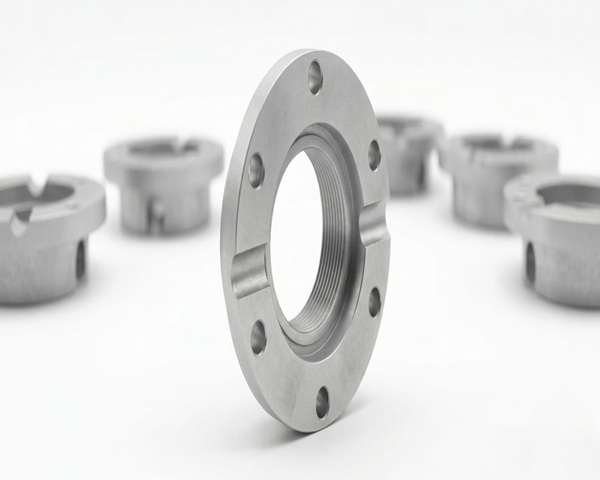

This article explains why many buyers still start with Aluminum CNC machining parts, and aluminum remains a common first material choice for CNC machined parts.
OEM buyers and industrial bulk buyers normally compare materials before machining starts. Many factors must be considered before final use inside the application. The same part can be made from other metals such as brass, steel alloys, and copper. The main reason aluminum is often chosen first is lower weight, easier machining in common grades, better finishing options, and easier movement into sample production.
Common aluminum CNC machined parts include brackets, connectors, structural parts, and covers, where unnecessary mass creates design limits. In many applications, the part does not need maximum hardness, but it must stay dimensionally usable and accept a good surface finish.
Before comparing where aluminum performs better and where it does not, it is important to look at what makes aluminum a practical first choice for many machined designs.
Why Lower Part Weight Changes Material Choice Early?
Weight is one of the first reasons aluminum enters early material discussion. Common grade aluminum 6061 has a density of about 2.70 g/cm³, while common steel stays near 7.85 g/cm³. It means same geometry machined parts can be weighted close to one-third.
This weight difference becomes visible in the real assembly. A simple bracket made from aluminum adds less weight before any design changes are made. That matters in handheld equipment, mounted electrical parts, and moving assemblies. In these products, extra weight creates handling limits.
The same advantage also appears during the prototype stage. Especially when you have to check parts through repeated manual fittings and fixture checks. Lower part weight makes handling easier during trials.
Lower weight does not mean aluminum is stronger. Its stiffness remains lower than steel because 6061 aluminum has an elastic modulus of 69 GPa, while steel stays close to 200 GPa. The same part can deflect more easily if the wall thickness stays thin and the geometry remains unchanged.
So, aluminum often becomes the first option where weight matters more than maximum rigidity and does not carry structural load.
Machining Aluminum Usually Requires Less Cutting Force
During Aluminum CNC machining, common aluminum grades need less cutting force than steel. The cutter meets lower resistance during chip formation, so the spindle load stays low in many simple parts.
It is a one reason grade 6061 common in CNC work. The grade stays stable, removes material cleanly, and is easy to access for regular production.
Less cutting force does not mean aluminum machining stays problem-free. Aluminum can create sticky chips, and if you do not control tool condition properly, then build-up edge.
So, tool selection and cutting control still matter even in common aluminum machined parts
Surface Finish Is Easier to Control in Common Aluminum Grades
Common aluminum grades such as 6061, 6082, and 7075 often give a cleaner visible finish. This happens when cutting stays stable. Final surface quality still depends on many factors like spindle speed, tool, cutting depth, and feed rate.
Aluminum is softer than steel and brass, so the material can stick to the cutting edge and form a built-up edge. During machining, this will leave marks on the surface and change the finish quality.
A sharp tool and stable cutting help the chip move cleanly and reduce drag marks. This matters because many aluminum parts, such as brackets and covers, stay visible after machining.
Machining Cost Can Be Easier to Control in Early Production
When you are at the design stage, many factors must be considered, and price is one of them. Product cost is very important now. In early CNC production, raw material price and machining cost both affect the final part value. For many aluminum parts, custom aluminum machining still takes the larger share because setup, cutting time, and tooling decide most of the total production cost.
Raw material is another reason aluminum stays on top in many simple CNC parts. Cost changes before machining even starts.
For example, a simple connector made from aluminum usually costs less than the same part made from brass or copper. The first reason is the lower base metal price. The second reason is weight. Aluminum density stays much lower, so the same part volume uses less material by mass.
This difference becomes more visible in bulk quantity. Brass machines well, but the raw material price stays higher and pushes part cost up before cutting time is added.
It does not mean aluminum machining parts always win in the final cost. Deep pockets, tight tolerances, and extra setups can still raise machining costs.
When You Should Check More Before Choosing Aluminum
Aluminum is a common choice and works well in many machined parts. Aluminum also has some limitations, and you have to consider them before final material selection. Here are some points that need attention.
Aluminum is softer than steel. It has lower stiffness, and the threads can wear out earlier under repeated tightening.
For example, take a simple mounting plate. If a small screw opens and tightens many times in the same tapped hole, the threads can lose hold earlier than steel.
Thin walls also need checking. A cover plate may machine correctly, but local bolt pressure can still pull the wall slightly during tightening. This becomes more visible when the wall thickness stays low.
Surface contact areas also wear faster when assembly repeats in the same location.
So, aluminum should be checked more carefully when the part needs strength, repeated load, and frequent tightening.
Why OEM Buyers Still Return to Aluminum for First Samples
Even after comparing with other metals, many buyers still prefer aluminum for the first sample. One reason is material availability. Common grades are easy to source in standard plate, bar, and block sizes. So production can start without waiting for special stock.
Raw material usually costs less at the sample stage, especially when compared with brass or copper. If a prototype fails to fit the final application, the loss stays lower than testing the same part in a higher-cost metal. A simple connector made from aluminum usually costs less than the same geometry made from brass, which is one reason many buyers first contact a custom aluminum machining supplier for sample work.
Also, the first sample normally needs visual approval before final material lock. Aluminum usually gives a clean machined surface, so edge quality, hole finish, and visible surfaces are easier to review.
Conclusion
Aluminum remains a practical material for many CNC parts. It gives lower weight, clean machining, and easier cost control in many early production cases.
It is not the right answer for every load condition. But for first samples and many common machined parts, aluminum still stays the first material many buyers check before moving to other metals.